Saturday, August 24, 2019

Pushkar Fair : The Pushkar Mela Of Beauty


               Visit Pushkar Camel Fair To Enjoy The Traditional Indian Festival


Pushkar Camel Fair 2019: - 
Pushkar Camel Fair 2018 is nothing but an annual cattle fair being conducted on Pushkar where nearly 30,000 camels are used to be congregated astonishingly. Pushkar is a small desert town found in the Indian state of Rajasthan. As a peculiar and captivating sight, it will give you an excellent opportunity to witness an Indian festival but in the traditional style. The Pushkar Camel Fair is celebrated with the intention to grasp the attention of local cattle traders to perform their business during the divine Karthika Purnima festival, which is held in Pushkar every year in the month of Karthika. With camel trading, the fair has developed into a major tourist attraction followed by a series of activities being arranged by the Tourist Department, Rajasthan.

Image result for pushkar fair beauty

A Brief History of Pushkar Camel Fair: - 
Pushkar remains restrained in a high esteem by the Indian Populace especially Hindus among five pilgrimages including Puri, Rameswaram, Badrinath and Dwarka. The story behind this is, in a battle, an evil spirit named Vajra Nabh has been killed by the Lord Brahma with his Lotus flower. The petals of that lotus flower reached earth and landed in and around the Pushkar where divine lakes sprang up. Some legends say that Pushkar Lake is the only point surrounded by a number of temples and palaces. The Brahma Temple present here is the only temple found for Brahma in India. The celebration of Pushkar fair lasts for five day and the fifth day is believed to be the most significant day during which the Pushkar lake had sprung up by the Lord Brahma. So, peoples from various parts of the country are used to take a divine dip in this lake.

Image result for pushkar fair best pic of the fair

Celebration of Pushkar Camel Fair: -
Why Pushkar Fair Festival is celebrated every year? For cattle trading, because cattle like camels, sheep, goat, cows and other domestic livestocks, are traded in large amount during this fair. In addition to cattle trading, parading of well decorated camels will be taken place. Despite animals of various types are traded, camels remain the top of the list. For parading, camels are cleanly washed and decorated with multi-colored cloths and jewelries to give interesting patterns. You can able to see bangles and bells around camel’s hoof, which jingles while they are walking around the sand dunes. Piercing the nose of camel is a custom practice in Pushkar. There is no doubt, Pushkar fair festival is the largest cattle fair, which you have ever seen around the world.

Image result for pushkar fair best pic of the fair

Highlights of Pushkar Camel Fair: -Camel competition is one among the striking features exists in Pushkar camel fair. Beautifully adorned camels will parade and in turn, compete to win the beauty contest. During this competition, people in large number are used to be seated on camel’s back. Then, the camel jogs around the sandy dunes and throws its riders from its back. This makes the spectators more cheerful. The prize will be given to the camel that accommodates individuals in maximum number on its back. Together with spectators, the animals would also get pleasure from the fervor and festival. The camels are seen grooming and tried to enjoy without missing a single bit of attention they have received at the festival.
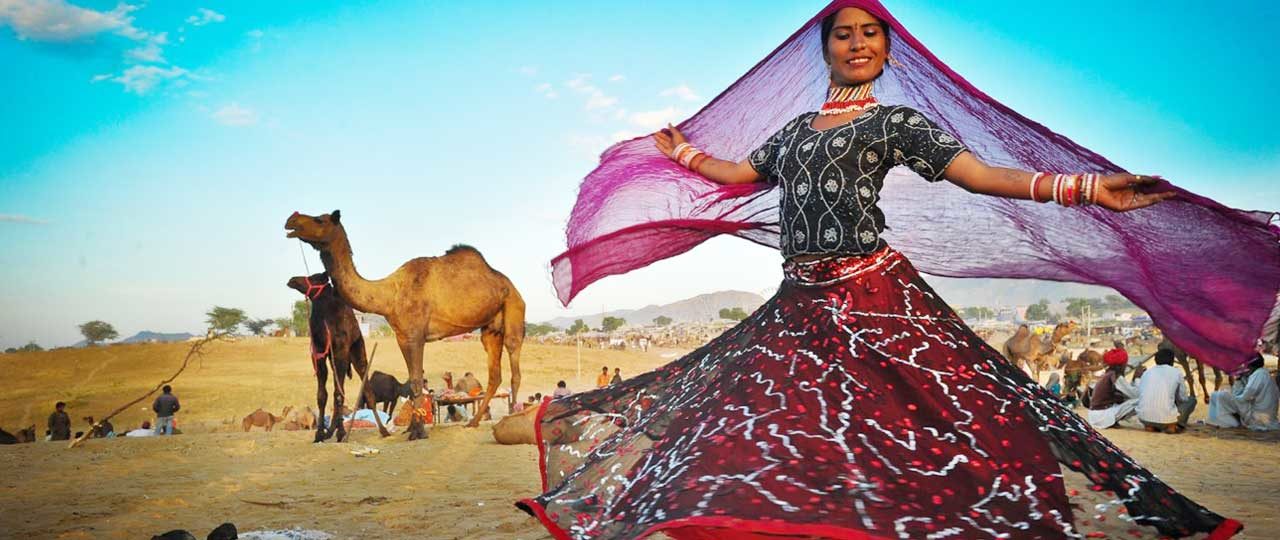
Image result for pushkar fair best pic of the fair

Dates of Pushkar Camel Fair: -
The fair is normally held every year in the month of November. The official announcement for Pushkar Camel Fair for the year 2019 will be between Mon, 4 Nov, 2019 and Tue, 12 Nov, 2019. The camel action will take place only on first four days and after which the time for being focused on heightened religious celebrations. So, you have to come before the commencement of the fair in order to take part in the fair with a full swing.

Image result for pushkar fair best pic of the fair

Major Attractions: -
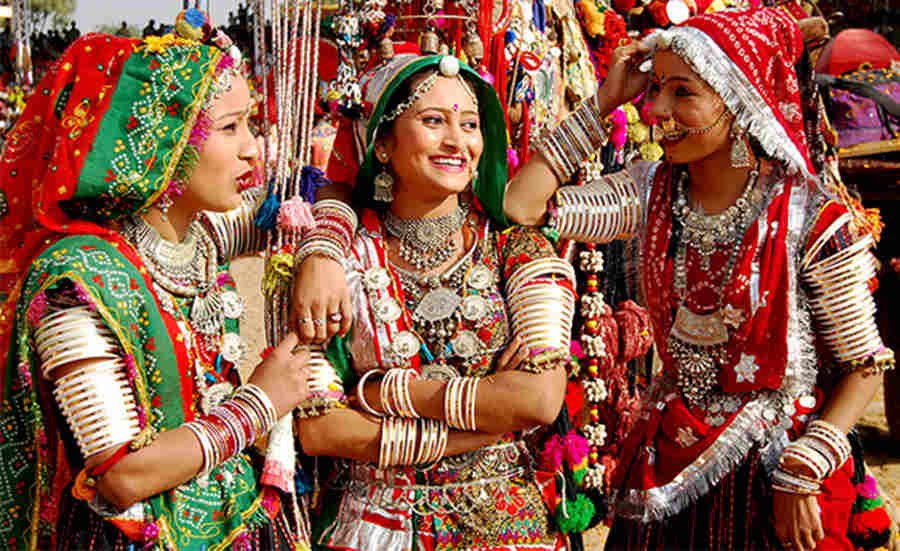
Pushkar fair is not just for cattle trading and camel competition, yet also exhibiting varied colorful arts of Rajasthan for the curious tourists. The artifacts displayed include jewelries for cattle like saddles, beads, strings, cowries and saddle-straps to things for human folks. Some of the major attractions are assumed to be Nagaur’s bead Necklace and silver ornaments and Ajmer’s printed textiles, patch work as well as tie & dye fabrics. The fair doesn’t end with the fashion as Pushkar fair is best known for its varied body tattoos. During this time, each and every household is found to set up certain stalls for attracting the passing crowd. But, keep it in mind that there is no space for alcohol or even vegetarian food because Pushkar is of course a religious site where the above mentioned things are strictly prohibited.

Image result for pushkar fair best pic of the fair

Things to do in Pushkar: -Pushkar Fair is really a grand event and therefore, you can indulge yourself in many a number of  exciting activities including Hot air ballooning, camel/horse riding, quad bike riding, safari trip at Sunset, shopping and even a sanctified bath in the Pushkar Lake as well.

  • Hot air ballooning: This activity is mainly for raising your adrenaline.
  • Horse / camel riding: Riding on camels and horse is the most popular attraction of visitors
  • Sunset safari trip: Watching camel carts swinging around the desert at sunset will really offer you a unique experience. Don’t forget to bring camera to capture those wonderful scenes.
  • Quad bike racing: Do you want to explore the nature of Thar Desert? If so, then you can do so on quad biking, which lasts from 15 minutes to 1 hour as per the wish of travelers.
Related image

How to reach: - It is very easy to reach Pushkar from different parts of the country as it seems to be well connected and availability of different ways of transport for travel. Those who prefer to travel via roadways can reach Ajmer where you will able to get bus services on a regular basis. Ajmer also has a railway station just 11 Km from Pushkar. For people travelling through, Jaipur Sanganer airport is the nearest airport, which is 146 KM from Pushkar.


India Tourism

India Luxury Tours

India Budget Tours

India Fair & Festival

Tuesday, August 20, 2019

Most Famous 15 Places to Visit in Jaisalmer, Rajasthan (India)


The monsoon season brings a breath of relief from the scorching heat and what place can be better than Rajasthan during this time. Every traveler is aware of the summers in this dry state, but with the arrival of monsoon, it welcomes its visitors to explore the royalty which is intact at its every heritage architecture. And when it comes to exploring Rajasthan, Jaisalmer city is considered as one of the best. Often called the golden city, this desert city is known for its magnificent forts, palaces and man-made reservoirs and lake which add a touch of heritage and culture of the royalty which prevails in Rajasthan. So, if you’re planning to take a tour of Rajasthan, make sure to spend the monsoon in Jaisalmer and live a few days like never before.

Image result for jaisalmer monsoon

Monsoon Weather in Jaisalmer:-
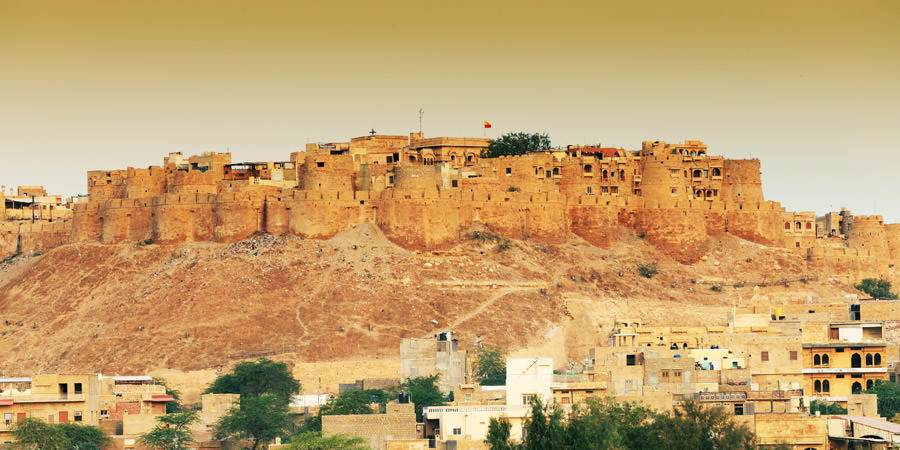
Jaisalmer Fort - The Jaisalmer Fort also goes by the name Sonar Quila (Golden Fort) as it rises from the desert itself and seems to become one with the golden hues of the sand. The setting sun adds its own magic and shrouds the fort with mystique. The fort is constructed in the classic style of the royals by local craftsmen. This fort is a world heritage site and forms an important plot point in one of Satyajit Ray’s famous Feluda stories and corresponding movie, Sonar Kela (The Golden Fortress).

Image result for jaisalmer fort

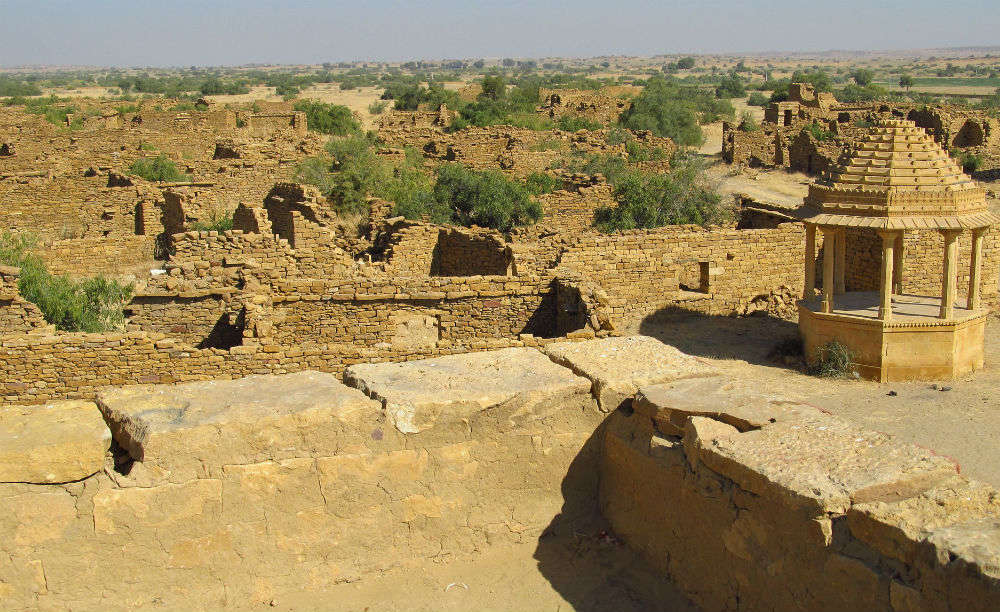
Kuldhara - The underlying history of Kuldhara has piqued the curiosity of one visitor too many, and makes it one of the most enigmatic destinations to visit in Jaisalmer, Rajasthan. The story has a beautiful daughter, an unscrupulous minister, scared villagers, an exodus in the middle of the night, and no idea where the villagers vanished. This is not the story of a movie, but the unfathomable legend that lies behind the abandoned village of Kuldhara. Located about 18 km from the city of Jaisalmer is this old town that was abandoned by its villagers in the 1800s. It was like the entire town vanished in the course of a single night. With about 85 villages full of people, it remains a mystery as to how no one saw them leave; in fact, even to this date, no one knows where all of them went either. The village remains uninhabited to the day, in the same state that the villagers had left it, hundreds of years ago. The location has become a major tourist destination as people from all over the world travel here to revel in the mysteries of the past. The desolate outline of Kuldhara etches a story in front of your eyes, if you are keen enough to read it!

Image result for kuldhara

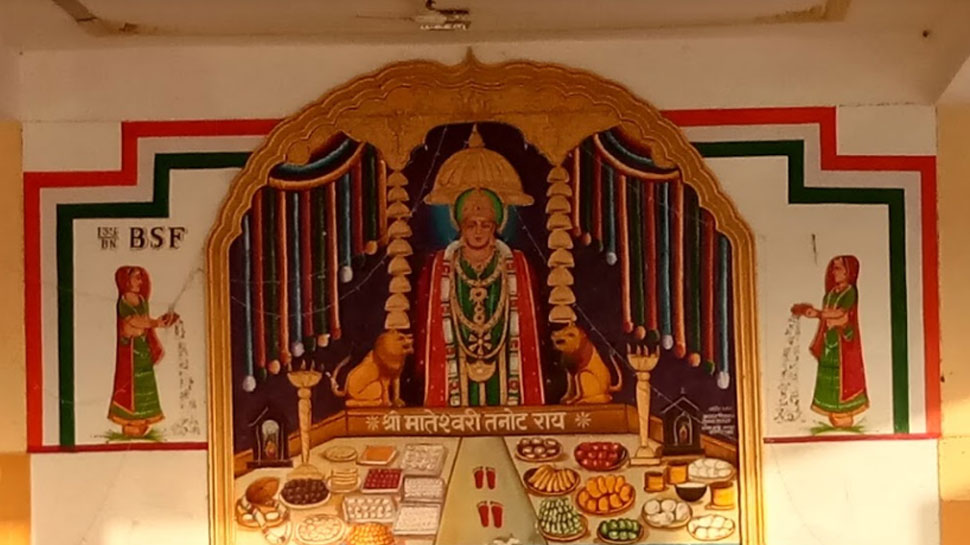
Tanot Mata Temple - Some 120 kilometres away from Jaisalmer is the Tanot Mata Temple. Tanot Mata is considered to be a reincarnation of Goddess Hinglaj. There are many stories of how during the 1965 India-Pakistan war, Tanot was under heavy attack and shelling. However, none of the shells or bombs fired at the temple exploded. This reaffirmed people’s faith that Goddess the temple. Post the war, the Border Security Force (BSF) rebuilt the temple and today, the temple is managed by a BSF Trust.

Image result for tanot mata mandir

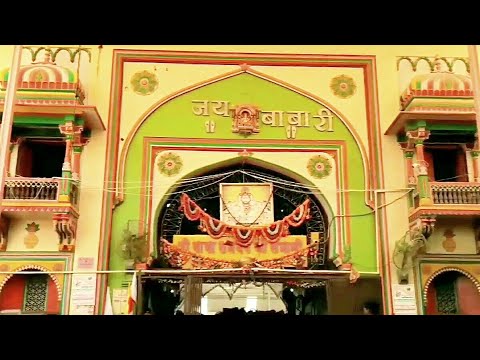
Ramdevra Temple - Located 12 kilometres from Pokhran on the Jodhpur – Jaisalmer route lies Ramdevra Temple. While most people assume it is a temple dedicated Lord Ram, it is in fact, dedicated to renowned saint Baba Ramdevji. The temple marks the eternal resting place of Baba Ramdevji and is visited by people of all faiths. Between August and September, a large fair known as Ramdevra Fair is held here, and it attracts large numbers of devotees who sing devotional songs all night long.

Image result for ramdevra temple front best pic jaisalmer

Vyas Chhatri - Located in Bada Bagh in Jaisalmer, Vyas Chhatri is one of the most beautiful examples of Rajasthani architecture. This old Brahmin cemetery, full of local versions of cenotaphs, is dedicated to Ved Vyaas, the sage who wrote the epic, Mahabharata. Filled with cenotaphs all throughout, this place is more popularly referred to as the sunset point of Jaisalmer. Every evening, hordes of people visit the Vyas Chhatri to get a glimpse of the beautiful desert sunset. Everywhere around here you can see beautiful golden sandstone chhatris that are covered in intricate and delicate carvings. A popular destination among tourists, Vyas Chhatri offers a bird’s eye view of Jaisalmer, the fort, and even the adjoining areas. Visitors can also witness a number of locals at Vyas Chhatri, playing Rajasthani tunes on the algoza, a double fluted instrument, making it an experience that astounds the senses.

Image result for vyas chhatri jaisalmer

Amar Sagar Lake - Amar Sagar Lake, located about 7 km towards the western outskirts of Jaisalmer, is a lake cum oasis lying adjacent to the Amar Singh Palace. The palace itself was built in the 17 th century. The complex that includes the palace and the lake is also home to several ponds and wells, along with an old temple dedicated to Lord Shiva. Numerous figureheads of animals carved in stone surround the lake, and according to legends, these carved figureheads are supposed to be protectors of the royal family. At one end, there are pavilions with stairs that lead down to the lake; while at the other end is a beautiful, aesthetically carved Jain temple. A peaceful and tranquil place, the Amar Sagar Lake is yet another spot in Jaisalmer where you have an opportunity to watch a gorgeous sunset.

Image result for amar sagar lake jaisalmer

Jaisalmer Government Museum - Established by the Department of Archaeology and Museums, it is a prime attraction for tourists visiting Jaisalmer. The most striking display is the trophy of Rajasthan‘s state bird Godawan (the great Indian bustard). Traditional household items, rock-cut crockery, jewellery and statues from the 7th and 9th century AD displayed here are remnants of the city’s rich cultural heritage.

Image result for jaisalmer museum

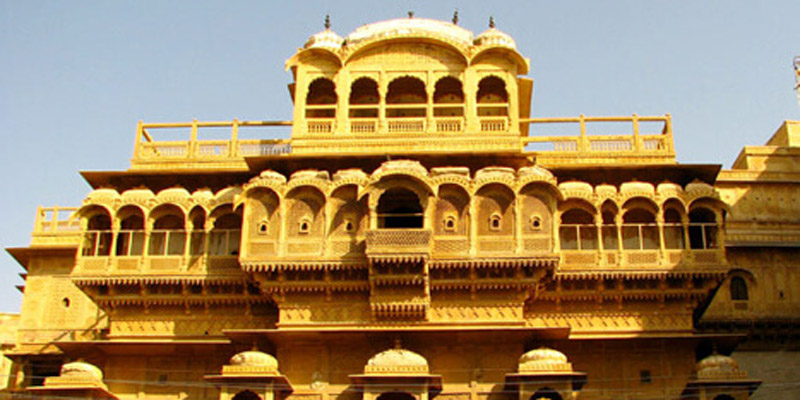
Nathmal Ji Ki Haveli - Two architect brothers built Nathmal Ji Ki Haveli in the 19th century. They worked on the haveli from two sides and the outcome is a beautiful blend of the symmetrical construction. Miniature style paintings and mighty tuskers carved out of yellow sandstone are used for decoration.

Related image

Salim Singh ki Haveli - This haveli was built in the first half of the 18th century and a part of it is still occupied by descendants of the original residents. The high arched roof is supported by carved brackets designed in the shape of peacocks. Legend has it that there were two additional wooden storeys that made it match the Maharaja's palace in height, but he ordered for the upper level to be demolished.

Image result for salim singh ki haveli

Patwon Ki Haveli - Among the largest and the most elaborately carved havelis in Jaisalmer, this five-storey structure sits proudly in a narrow street. While the haveli has lost some of its early glory, a few paintings and mirror work art can still be seen on the inside walls.

Image result for patwaon ki haveli

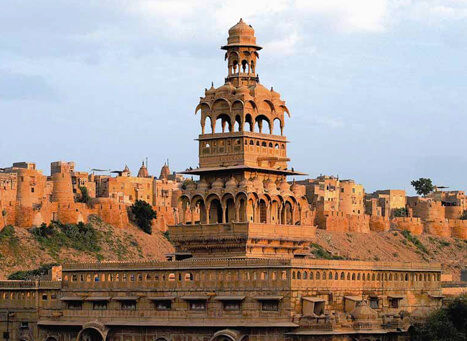
Mandir Palace - The five-storeyed majesty of the Badal Mahal (Cloud Palace) is further enhanced by its pagoda-like Tazia Tower. Each floor of the palace has an intricately carved balcony. The Badal Palace owes its beauty to the skills of Muslim craftsmen who moulded the tower in the shape of a Tazia (a float that’s part of the procession of Muharram).


Image result for mandir palace

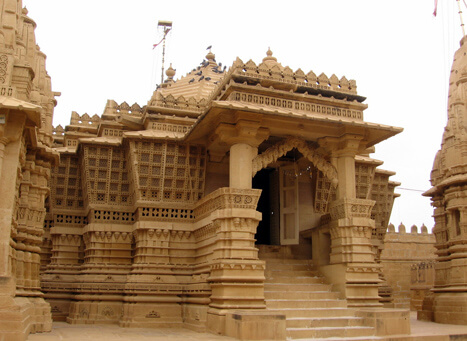
Jain Temples of Jaisalmer - The Jain Temples located inside the Jaisalmer Fort date back to the 12th and 15th centuries. The temples are dedicated to Rikhabdevji and Shambhavdevji, famous Jain hermits known as 'Tirthankars' (wise teachers who taught people how to attain nirvana). Like all other structures in Jaisalmer, the temples are carved out of yellow sandstone. They have been built in the famed Dilwara style which is known for its beautiful architecture.

Image result for jain temple of jaisalmer

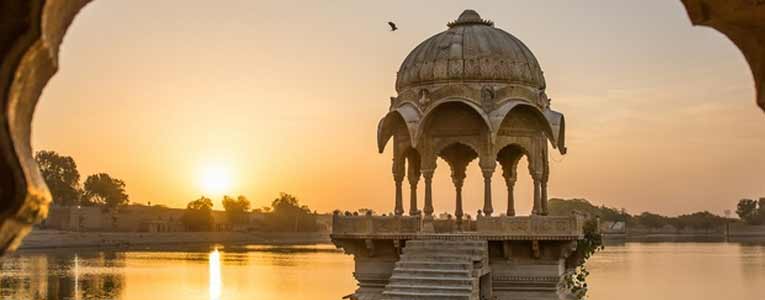
Gadsisar Lake - Gadisar Lake was constructed in the 14th century by Maharawal Gadsi Singh to meet the water needs of his arid lands. Considering its importance, many small temples and shrines were constructed around it, transforming it into a pilgrimage centre and a tourist attraction.

Image result for gadsisar lake

Bada Bagh - About 6 kilometres to the north of Jaisalmer lies Bada Bagh, also called Barabagh (literally Big Garden). This garden complex houses chhatris or royal cenotaphs of the Maharajas of Jaisalmer state, including that of Jai Singh II. The location of the garden is such that it offers wonderful sunset vistas to tourists.

Image result for bada bagh

Desert National Park - The Desert National Park displays the best of the Thar desert’s ecosystem and its varied wildlife. The Park is formed of undulating sand dunes, jagged rocks, dense salt lake bottoms and inter-medial areas. Various species of animals such as black buck, chinkara and desert fox inhabit the Park. The highly endangered Great Indian Bustard, one of the world's heaviest flying birds, can also be seen here. In winter, the park hosts an incredible variety of migratory raptors such Himalayan and Eurasian Griffon Vultures, Eastern Imperial Eagle, and the Saker Falcon.

Image result for desert national park


India Tourism 

Rajasthan Tourism 
Jaisalmer Attractions

India  Tour Packages

India Luxury Tours

India Budget Tours


Monday, August 19, 2019

Beauty of Madhya Pradesh || Madhya Pradesh Tourism


Madhya Pradesh, a large state in central India, retains landmarks from eras throughout Indian history. Begun in the 10th century, it’s Hindu and Jain temples at Khajuraho are renowned for their carvings of erotic scenes, most prominently Kandariya Mahadeva, a temple with more than 800 sculptures. The eastern Bandhavgarh and Kanha national parks, noted Bengal tiger sanctuaries, offer guided safaris.

Image result for madhya pradesh tourism

Madhya Pradesh history states the past of the state, when it was ruled by the renowned dynasties. It even portrays the journey of the state from the past to the present. The state is said to be the habitat of some of the famous dynasties. The history of the place dates back to approximately 9, 000 long years, which is being proved by the historical findings of this state located in the central part of the country of India. Madhya Pradesh's history can be broadly categorized into three distinct phases, which are mentioned below:

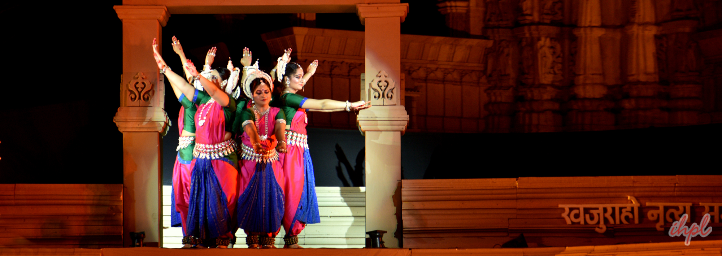
Fairs & festivals are the spirit of Indian Culture & Madhya Pradesh life is full of celebrations. Here we have religious festivals having mythological derivations, those that mark the seasons; others commemorate a local deity or a hero. There are many other festivals introduced by MP Tourism to showcase the legacy or culture of a region. Traditions of the state can best be captured at its fairs & festivals. Some of the larger & more popular celebrations are briefed here.

Image result for madhya pradesh fair and festival khajuraho

Madhya Pradesh is a vast state, temperature varies from city to city. The best time to visit depends on the place you want to explore and the theme of your holiday. Some areas are suitable for summers, while some for monsoons and winters. So, it is better first to check the temperature of the city you are visiting.


Gwalior is a city in the central Indian state of Madhya Pradesh. It's known for its palaces and temples, including the Sas Bahu Ka Mandir intricately carved Hindu temple. Ancient Gwalior Fort occupies a sandstone plateau overlooking the city and is accessed via a winding road lined with sacred Jain statues. Within the fort’s high walls is the 15th-century Gujari Mahal Palace, now an archaeological museum.

Gwalior's legendary beginning stems from a meeting between Suraj Sen & the hermit Gwalipa, who lived on the hilltop where the fort stands. When Suraj Sen asked for drinking water the recluse struck a rock & a cool clear spring gushed out & after having bath from that water Suraj Sen’s leprosy got cured. Then in gratitude king had built the tank from the fountain & named it Suraj Kund then later on the name changed to Suhan Pal & said his descendants would remain in power as long as they kept the name pal. His next 83 descendants did just that but number 84 changed his name to Tej Karan & said Good Bye to his kingdom.

Image result for madhya pradesh

Then the Tomars came in to existence in 1398 & remained in power until 1505 when Ibrahim Lodi captured it. It was Raja Man Singh [1486-1516], the most illustrious of tomars, who built the magnificient palace Man Mandir here. The Mughals, under Babar later occupied the fort. The Marathas captured it in 1784 & then finally it came into the possession of the Scindias. During the First War of Independence in 1857, it witnessed a fierce battle when thousands of Indians fought against the British under the leadership of heroic Rani Lakshmi Bai of Jhansi, still in her twenties & tantya tope. It was here that Rani of Jhansi was killed fighting fiercely against heavy odds. A memorial statue is there of Rani of Jhansi.

Orchha –
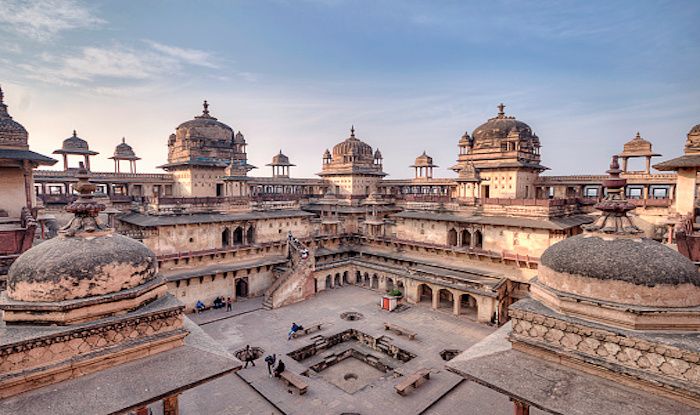
Orchha is a town in Madhya Pradesh near the banks of Betwa river. The medieval city of Orchha seems to have frozen in time, its palaces and temples still retaining their original grandeur. Orchha had the distinction of being the capital of one of the largest and most powerful kingdoms of Central India. The Bundela Rajput chieftain, Rudra Pratap, founded the city, located by the side of the beautiful Betwa River, in the 16th century. The word Orchha means 'hidden'. When the Tughlaqs, who were ruling Delhi in the 15th century, pushed the Bundelkhand rajas out of Garkhundar, they retreated to distant Orchha.

Image result for orchha fort

Khajuraho -
The Khajuraho Group of Monuments is a group of Hindu, Buddhist and Jain temples in Madhya Pradesh, India, about 175 kilometres (109 mi) southeast of Jhansi. They are one of the UNESCO World Heritage Sites in India. The temples are famous for their nagara-style architectural symbolism and their erotic sculptures.

Related image

Most Khajuraho temples were built between 950 and 1050 by the Chandela Rajput dynasty. Historical records note that the Khajuraho temple site had 85 temples by the 12th century, spread over 20 square kilometers Of these, only about 25 temples have survived, spread over 6 square kilometers. Of the various surviving temples, the Kandariya Mahadeva Temple is decorated with a profusion of sculptures with intricate details, symbolism and expressiveness of ancient Indian art.
The Khajuraho group of temples were built together but were dedicated to two religions, Hinduism and Jainism, suggesting a tradition of acceptance and respect for diverse religious views among Hindus and Jains in the region.

Ujjain is the quiet and relatively small provincial town. Ujjain is situated about 60 kms. from Indore. Ujjain is one of the greatest cities of ancient India and one of the seven sacred cities of Hindus in India. It is also one of the four towns where the Kumbh Mela is held and plays as a host up to a million pilgrims who gather on the place every twelve years. Various people came here to bath in the Shipra river and worship at the temples on its banks. 

Image result for ujjain

According to Hindu astronomers, it is also the city from where the Tropic of Cancer pass. This explains the presence of the observatory (Vedha Shala) built by the Raja Jai Singh of Jaipur in 1725. Even today, the Ephemeris tables (predicted positions of the planets) are published here. Ujjain is also known for industry and crafts. The best season to visit Ujjain is from October to March.


Saturday, August 17, 2019

Customize Tour For North India || The India Tourism Blog


The North Indian States draws numerous tourists from all across the world as it is a complete package of diversities. Therefore, it is the most frequented Indian region with well-known tourist destinations.
Delhi
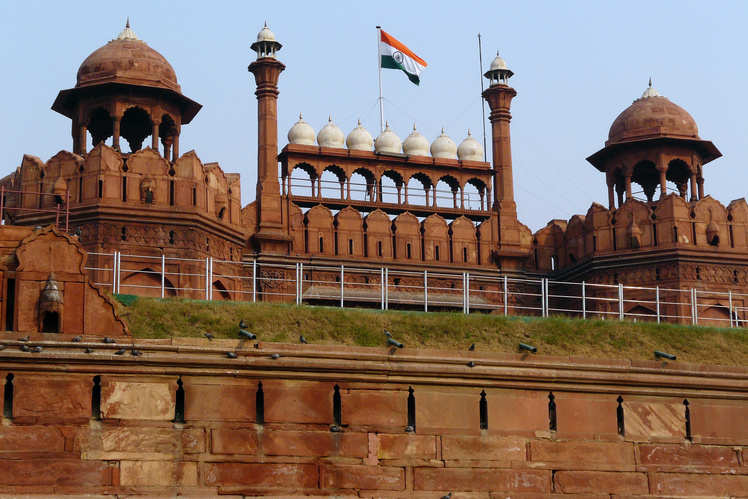
When it comes about Golden Triangle, Delhi is the first place who welcomes the visitors and takes to explore the glimpses of Mughal Era and Sultanate. Old Delhi and New Delhi are the two parts of this city. It has everything from monuments, parks, shopping and delicious delicacies. The Major Attraction Of city are Akshardham Temple, Lotous Temple, The Red Fort, India gate, Qutub Minar and much more . The Red Fort Built in 1638 by Mughal Emperor Shahjahan, this is a World Heritage site located in Delhi. Red Fort was the home to most Mughal Emperors of the dynasty for up to almost 200 years, and is situated right in the centre of Delhi. Qutub Minar The tallest minar in the country, this is yet another World Heritage site that you must check off from your list of must-see spots in the Golden Triangle trip. India Gate Not to be confused with the similarly named, Gateway of India located in Mumbai. This is a War memorial structure in Delhi and a landmark of patriotic history for Indians.
Image result for delhi
Jammu & Kashmir
Jammu & Kashmir is the northernmost part of India consisting of three divisions Jammu, Kashmir and Ladakh. This beautiful land is called “The Heaven on Earth”. The scenic beauty of Jammu and Kashmir keeps tourists mesmerized. It has so many beautiful tourists spots and attractions, which include Srinagar, Gulmarg, Udhampur, Kupwara, Kargil, Sonmarg, Pulwama, Pahalgam, Doda, Poonch, Anantnag, Baramullah.
Image result for jammu kashmir tourism
Rajasthan
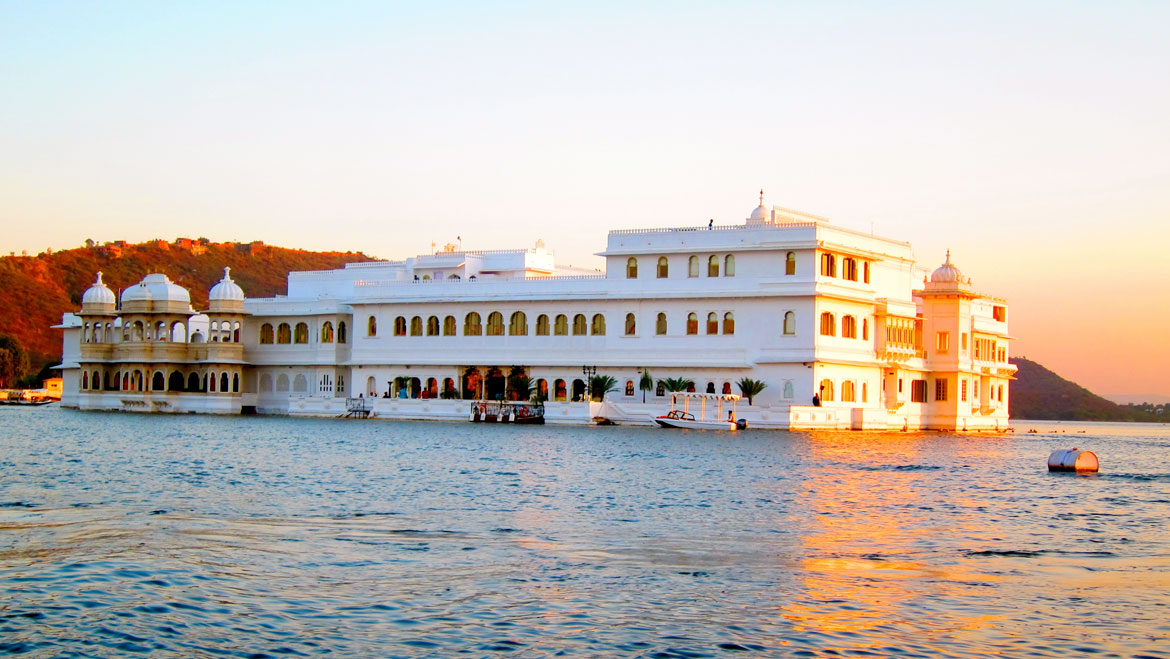
Rajasthan is known as the “Rajasthan Desert state of India” is one the most admired tourist destinations of India. Therefore, tourists from overseas and within the country travel to Rajasthan in large number every year. Its vibrant culture and heritage draws the attention of every tourist. This land of Maharajas reflects royalty in tradition, art & crafts, architecture, food etc. Some of its prominent cities include Jaipur, Udaipur, Jaisalmer, Jodhpur, Ajmer, Pushkar, Bikaner and many more such places. Known for bravery, amazing forts, enthralling palaces, handicrafts and rich traditional culture, colorful camel and elephant safari and Pushkar Mela this state also has a Hill Station called Mt. Abu. Amer Fort, City Palace, Hawa Mahal, Jantar Mantar, Jaigarh fort, Lake Pichola, Jal Mahal, Umaid Bhawan Palace, Albert Hall Museum and many more attractions are awaiting your presence in Rajasthan.
Image result for rajasthan
Ladakh
Ladakh is a pleasant region in Jammu & Kashmir. It has enchanting valleys of flowers and lakes. It is also called the land of passes as it has numerous well-known passes. It’s largest town is Leh. What attracts most to the tourists in Ladakh are the beautiful and pleasant Nubra Valley, Kishtwar, Hemis, Zanskar, Pangong Lake and many more. The monasteries and the Indo-Tibetan culture are the major attractions of Leh-Ladakh.
Uttarakhand
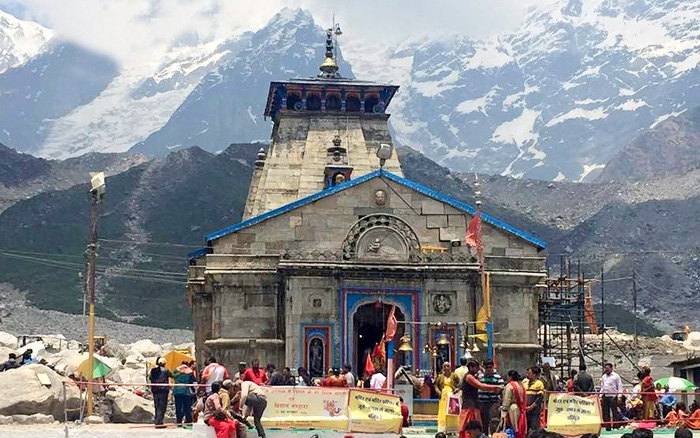
Uttarakhand is majorly known for its pilgrimage sites. It is one of the holy states of India. It is situated in the northern part of India and is visited by pilgrims in large number every year. Uttarakhand lies quietly on the lap of the Himalayas. Dehradun, Nainital, Haridwar, Rishikesh are its famous tourists destinations. Nainital lake, Badrinath Temple, Har ki Pauri Chandi Devi Temple, Valley of Flowers National Park, Rajaji National Park, Jumpin Heights, Naini Peak, Kedarnath Temple, Ram Jhula, Lakshman Jhula, Kempty falls, Jim Corbett National Park and many other such attractions are frequented by tourists during their tour to Uttarakhand.
Image result for uttrakhand tourism
Himachal Pradesh
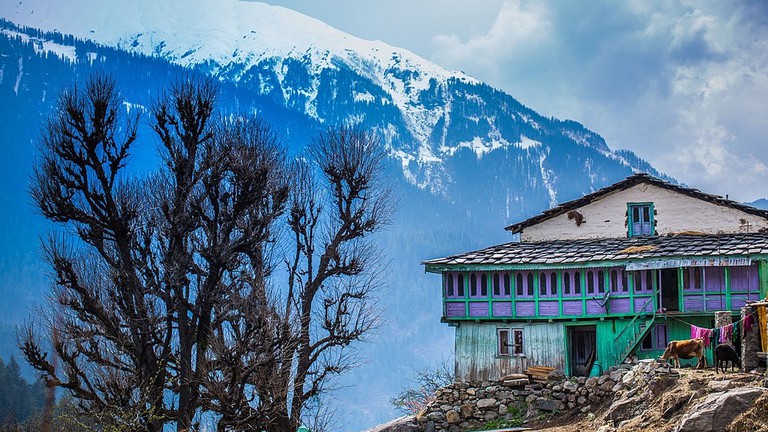
Himachal Pradesh has natural beauty in abundance and so it is visited by tourists from overseas to spend peaceful moments amidst nature in tranquility. It has enchanting valleys that gives panoramic view. About 90% of its population lives in villages and towns. The major places where tourists love to go in Himachal Pradesh are Kullu, Manali, Shimla, Mussoorie, Chamba, Dharamshala, Dalhousie, Kangra, Kasauli, Hamirpur, Solan, Una and some major attractions include Rohtang Pass, Solang Valley, Kangra Valley and Jakhoo Hill.
Image result for himachal pradesh
We are the leading tour operator company working since many years, and having the best customize tour packages. visit our website for more details. and explore the North part out india with us.

Wednesday, August 14, 2019

Top Tourist Attractions in Ajmer


Ajmer Tourism – 
Ajmer gets its name from ‘Ajay Meru’. Roughly translated, it means ‘invincible hills’. Nestled in the Aravallis south west of Jaipur, Ajmer was founded by Raja Ajaypal Chauhan in the 7th century AD. Till the late 12th century AD, Ajmer was the epicentre of the Chauhan dynasty. After Prithviraj Chauhan’s loss to Mohammed Ghori in 1193 AD, Ajmer became home to several dynasties. The Mughals in particular, fancied it as their favourite destination due to the presence of the holy Ajmer Sharif Dargah. One of the early meetings between the Mughal King Jahangir and the Ambassador of the Court of Queen Elizabeth, Sir Thomas Roe, took place here in 1616. A few centuries later, the city was handed over to the British, making Ajmer the only region in Rajputana to be directly controlled by the East India Company. Ajmer is now regarded as an educational and cultural centre.

Image result for ajmer fort
Ajmer Sharif Dargah - This is a Sufi shrine which encloses the ‘maqbara’ (grave) of Garib Nawaz, the Sufi saint Khwaja Moinuddin Chisti. Built in the 13th century, the shrine is popular among people of all faiths who flock here to have their prayers answered. The shrine has three gates – the main gate or the Nizam gate, the Shah Jahan gate erected by the Mughal Emperor and the Buland Darwaza. Another big draw at this holy shrine is the sacred and scrumptious food that is served to devotees. Cooked in giant cauldrons known as ‘degs’, devotees gather in throngs to be blessed by this prasad.
Image result for ajmer
Adhai Din Ka Jhonpra - The Adhai Din Ka Jhonpra was originally built to function as a Sanskrit college but was later converted into a mosque by Sultan Ghori in 1198 AD. An impressive blend of Indo-Islamic architecture, the structure was further beautified by Sultan Iltutmish in 1213 AD. Legend has it that the mosque is known as Adhai din ka Jhonpra (literally meaning, The Hut of Two and a Half Days) because of a two and half day fair held here during Urs in the 18th century.
Image result for dhai din ka jhopra
Mayo College - Mayo College is one of India’s oldest independent boarding schools. Founded in 1875, and named after Richard Bourke, the 6th Earl of Mayo, Mayo College was set up to provide the scions of India’s princely states with an education similar to that provided by the Eton College in Britain. John Lockwood Kipling, father of Nobel Laureate, Rudyard Kipling, as principal of Mayo College, furnished the design of the Coat of Arms which shows a Rajput and a Bhil warrior. The college building is one of the finest extant examples of Indo-Saracenic style of architecture.
Image result for mayo college
Anasagar Lake - Anasagar Lake is a scenic artificial lake, commissioned and built by Arnoraj Chauhan, son of Ajaypal Chauhan, between 1135 and 1150 AD. Arnoraj was also known as Anaji, which gives the lake its name. Many years later, Mughal Emperor Jahangir added his touch to the lake by laying out the Daulat Bagh Gardens near the lake. Emperor Shah Jahan too, contributed to the expansion by building five pavilions, known as the Baradari, between the garden and the lake.
Image result for Anasagar Lake
Soniji ki Nasiyan - Soniji ki Nasiyan, also known as the Ajmer Jain Temple, is a wonderful example of ornate architecture, and is dedicated to Risabh or Adinath. Its entrance is made of red stone and the marble staircase inside is engraved with images of the holy Tirthankars – omniscient teachers of Jain faith who taught righteousness. Constructed in the late 19th century, this temple is counted among the richest temples in India. Its main chamber, Swarna Nagari (City of Gold), is aptly named so because of the several gold-plated wooden figures it houses within its walls. This famous architectural marvel finds a mention in Kurt Titze’s book, ‘Jainism: A Pictorial Guide to the Religion of Non-Violence.’
Image result for Soniji ki Nasiyan
Gateway of Taragarh Fort - Gateway of Taragarh Fort is the imposing main gate of Taragarh fort which is built on a crest of a hill. The main gateway of the Taragarh, which consists of two colossal bastions on both sides with strong guard rooms, has sculptures of elephants adorning it. The main highlights of this once magnificent fort are its water reservoirs and the Bhim Burj, on which the canon called Garbh Gunjam (Thunder from the Womb) was mounted. There is also the magnificent Rani Mahal with its stained windows and murals, which used to house the wives of the rulers. All this makes the Taragarh Fort a nonpareil example of Rajaputana architecture that’s also a major attraction for tourists visiting Ajmer. Fort is also known for Dargah of Hazrat Miran Sayyed Husain Khangswar(Miran Sahib) .
Image result for Gateway of Taragarh Fort
Government Museum - The Ajmer Government Museum serves as one of the prime tourist destinations in Ajmer. The museum is housed within the magnificent fortified palace of the legendary Mughal Emperor Akbar, which was built in 1570. The museum is also known as Bharatpur Museum and is home to a rich collection of archaeological artefacts. Along with stone sculptures, inscriptions and armours, it features the finest paintings of the previous Maharajas of Bharatpur.
Image result for Government Museum ajmer
Kishangarh Fort - Kishangarh Fort is a beautiful fort located in Kishangarh, Rajasthan. On visiting the fort, one will see jails, granaries, armouries and other significant buildings present inside of it. The Durbar Hall is its biggest structure, and was the place where the kings carried out their official meetings on a daily basis. And when it comes to the most attractive place inside the fort, it has got to be Phool Mahal which showcases the splendour of the kings from the Rathore clan in a glorious manner, with gorgeous murals and frescos adorning its walls. Alongside the fort, a few lakes like Gundu lav talab & Hamir Sagar are located which serve as a great picnic spot. If you want to revisit history, Kishangarh Fort is a place you ought to visit when in Rajasthan. Near by Kishangarh one can also see Nimbark Peeth & Chor Baori -Salemabad(20Km.), Roopangarh(25Km.), Ruins of Karkeri fort and Cenotaphs of Shri Jawan Singh-Karkeri (30Km. via Salemabad), Group of old Makbaras-Tukda(7 Km.), Tilonia (20 Km.) ,Pitambar Ki Gaal-Silora (7 Km.) & Ruins of old Palace or Sarai- Chatari .
Image result for Kishangarh Fort
Prithvi Raj Smarak - Prithvi Raj Smarak is a memorial made in the honour of the brave Rajput chief, Prithvi Raj Chauhan III. Regarded as the epitome of devotion and courage, he was the last ruler of the Chauhan lineage and was enthroned to rule over the twin capitals of the Ajmer and Delhi, in 12 th century. The memorial exhibits the statue of Prithvi Raj III seated on his horse, made in black stone. The horse has one of its front hooves up in the air, as if charging forward. The memorial stands atop a hill, surrounded by the Aravalli range, giving visitors a panoramic view of the city of Ajmer. The memorial also has a garden adjacent to it, wherein tourists can sit and relax. 
Image result for Prithvi Raj Smarak ajmer

Tuesday, August 13, 2019

Top Things To Do In Lucknow || Uttar Pradesh Tourism


Lucknow (Uttar Pradesh Tourism) –Lucknow is a beautiful city that still retains its old world charm. Your tour to Lucknow will be a truly memorable one when you travel in India. While arranging for Lucknow sightseeing tours, make sure that you visit the following tourist attractions that are worth seeing. The exquisite monuments that were built during the ancient times are still preserved for the present to see and cherish. So check out these tourist attractions as a part of Lucknow Tours.
Lucknow is very popular for its cultural values, heritage, food and its people. Women love to revel in the traditional dance form Kathak which speaks volumes about the essence and roots of India. Tourists flocking the region marvel at the architectural wonders and splendid designs reflected in the remnants of the enriching cultural and historical past displayed at several monuments, palaces and forts.
Image result for LUCKNOW
The city is a symbol of harmonious relationship between the Hindus, Sikhs and the Muslims. The common dialect spoken in Lucknow is Hindi, Urdu and other Hindustani languages. Lucknow gives you the reason to taste the true flavours of India as it is famous for kebabs, sweets and various Mughal delicacies integral to India’s culinary specialties.
Some of the places of attractions in Lucknow are Bara Imambara, Lucknow Zoo, British Residency, Hazratganj, Chhota Imambara, Dr. Ambedkar Park, Aminabad, Moti Mahal, Constantia House, Chakra Tirth Temple, Husainabad Clock Tower, etc.
Image result for LUCKNOW
At the heart of the city is Rumi Darwaza which is a popular Mughal getaway that speaks highly about the history of India. Spot the huge arched wall near the 18th-century Bara Imambara shrine. Go upstairs where you will find a maze of narrow tunnels that lead to the highest spot from where you can catch breathtaking views of the city.
1# Bara Imambara –Bara Imambara, also known as Asfi Mosque is an imambara complex in Lucknow, India built by Asaf-ud-Daula, Nawab of Awadh in 1784. Bara means big.
Image result for BARA Imambara
2# Chota Imambara :-Chota Imambara, also known as Imambara Hussainabad Mubarak is an imposing monument located in the city of Lucknow, Uttar Pradesh, India. Built as an imambara or a congregation hall for Shia Muslims, by Muhammad Ali Shah, the Nawab of Awadh in 1838, it was to serve as a mausoleum for himself and his mother, who is buried beside him.
The significance of Panjetan, the holy five, is once again emphasized here with five main doorways. This Imambara consist of two halls and a Shehnasheen (a platform where the Zarih of Imam Husain is kept.) Zarih is the replica of that protective grill or structure which is kept on the grave of Imam Husain at Karbala, Iraq. The large green and white bordered hall of Azakhana is richly decorated with chandeliers and a good number of crystal glass lamp-stands. In fact, it was for this profuse decoration that the Imambara was referred by European visitors and writers as The Palace of Lights. The exterior is very beautifully decorated with Quranic verses in Islamic calligraphy.
Image result for Chota Imambara
3# Lucknow Zoo :-Nawab Wajid Ali Shah Prani Udyan, Lucknow, popularly known as Lucknow Zoo (earlier known as “Prince of Wales Zoological Gardens”) was established in the year 1921 to commemorate the visit of His Royal Highness, the Prince of Wales to Lucknow. It is situated in 29 hectares area in the heart of the city. It houses around 1000 animals of more than 100 species. The zoo gets around 11-12 lacs visitors every year. The zoo is well known for its ‘Bal Rail’, a toy train that runs across the zoo and paddle boating that allows the visitors to recreate while visiting the animals. The visitors can also avail the facility of Pollution free Battery Vehicle for moving around the zoo.
Image result for Lucknow Zoo
4# Hazratganj Market :-
Hazratganj is a major shopping area situated in the heart of Lucknow in the Indian state of Uttar Pradesh. In addition to bazaars, it also contains shopping complexes, restaurants, hotels, theaters and offices.
Image result for Hazratganj Market
5 # Rumy Darwaza :-The Rumi Darwaza, in Lucknow, Uttar Pradesh, India, is an imposing gateway which was built under the patronage of Nawab Asaf-Ud-daula in 1784. It is an example of Awadhi architecture. The Rumi Darwaza, which stands sixty feet tall, was modeled after the Sublime Porte in Istanbul.
Image result for rummy darwazA LUCKNOW
6 # Dilkusha Kothi:-Dilkusha Kothi is the remains of an eighteenth-century house built in the English baroque style in the quiet Dilkusha area of Lucknow in India. Today there are only a few towers and external walls as a monument, though the extensive gardens remain.
Image result for dilkusha kothi lucknow